
Farm motor & agricultural machinery insurance for Australian farmers
An accident, rollover, fire or theft can take essential farm vehicles or machinery out of operation when they are needed most. RMA Insurance Brokers helps farmers review insurance for tractors, harvesters, farm vehicles, trailers and attachments, taking into account how the equipment is used both on and away from the farm.
Working with farmers and agricultural businesses across Australia.
Overview
Farm motor insurance at a glance
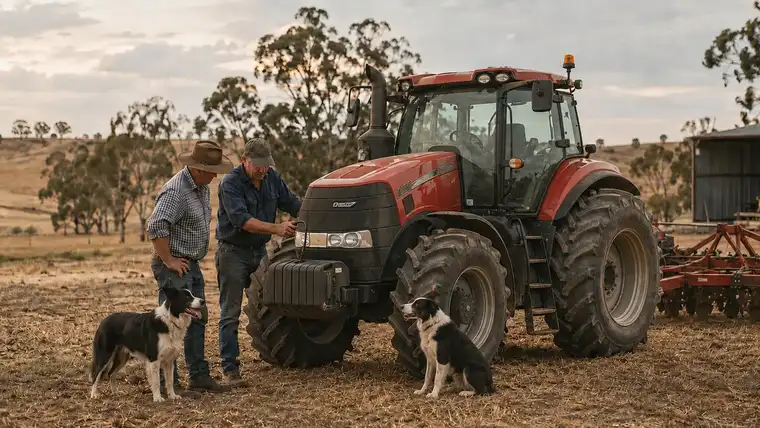
Farm vehicles and machinery are central to the day-to-day running of many farming businesses. Insurance may be arranged for tractors, harvesters, farm vehicles and other agricultural machinery against selected insured events, together with liability cover where applicable.
The insurance needed depends on the equipment you own, its value and how and where it is used. As machinery is purchased, replaced or modified, the insurance should be reviewed so the schedule continues to reflect the operation.
Who it is for
Who should consider farm motor & agricultural machinery insurance?
Farm motor and agricultural machinery insurance is relevant to farming and agricultural businesses that rely on vehicles and mobile equipment in their day-to-day operations, including:
- broadacre and cropping farms
- livestock and mixed-farming operations
- dairy and horticultural businesses
- farms using tractors, harvesters or self-propelled machinery
- farms operating utilities, 4WDs, trucks or trailers
- agricultural contractors or businesses using machinery away from their own property
For mixed farming businesses, farm vehicles and machinery often need to be considered alongside Farm Insurance and Crop Insurance so the different parts of the operation are reviewed together.
Cover
What cover may be available?
Insurers structure farm motor cover differently, but insurance is commonly arranged at one of three levels for each vehicle or item of machinery.
- Comprehensive
- Covers accidental loss of or damage to an insured vehicle or item of machinery, theft and selected legal liability.
- Third party, fire and theft
- Provides selected fire and theft cover for the insured asset together with legal liability.
- Third party property damage only
- Covers legal liability for damage caused to other people's property, without covering accidental damage to the insured vehicle or machinery itself.
Subject to insurer acceptance, insurance may then be arranged across the following asset groups.
Farm utes, 4WDs and trucks
Insurance may be arranged for utilities, 4WDs and trucks used across the farming operation, subject to insurer acceptance and the policy schedule.
Registration, carrying capacity, load type and where the vehicle operates can all influence how it is insured.
Tractors and harvesters
Tractors and harvesters are often among the higher-value assets on a farm and may be insured individually with specified values.
Whether they sit in a motor section or a farm machinery section depends on the insurer and the policy structure selected.
Self-propelled sprayers and other mobile agricultural machinery
Self-propelled sprayers, spreaders, telehandlers and similar mobile machinery can be listed with the values and use disclosed to the insurer.
Availability, settlement basis and excesses differ between insurers.
Unregistered or registration-exempt agricultural vehicles
Machinery that is not normally registered for road use can still be identified and insured where the insurer accepts the risk.
The classification applied, and any road-use conditions, should be confirmed rather than assumed. Using such a vehicle on a public road or public property may require a permit or other legal authorisation, and property-damage liability may depend on those requirements being met.
Trailers and towed implements
Trailers, seeders, bins and other towed implements may be scheduled alongside the vehicles and machinery that tow them.
They are not necessarily insured under the towing vehicle, so each item should be listed with a realistic value.
Attachments, accessories and permanently attached equipment
Front-end loaders, buckets, spray booms, GPS units and similar equipment can be identified so their value is reflected in the insurance arranged.
Where cover is unspecified, per-item and overall limits may apply, so higher-value items are best listed individually.
Classification, attachments and sublimits
Vehicles, machinery, implements and attachments used by the same farming business may be insured differently. Registration status, whether equipment is self-propelled or towed, where it is used and whether it is used for contracting can all affect how an insurer classifies the asset.
Blanket or unspecified cover may have per-item or overall limits below the value of some equipment. Higher-value machinery and attachments are generally better identified individually with realistic values, which is why the machinery schedule should be reviewed item by item.
Working machinery, road use and goods carried
Motor legal liability may not apply while agricultural machinery is being used as a tool of trade, such as while spraying, harvesting, ploughing, lifting or pumping. That exposure may need to be considered under Farm Insurance or another liability policy, so the motor and liability policies are best reviewed together.
Compulsory third party or equivalent statutory injury insurance is separate and varies between Australian jurisdictions. Any allowance for goods carried may also be restricted, linked to an accepted vehicle claim and subject to its own limit or excess, so grain, livestock, produce or equipment in transit may need Transit & Cargo Insurance. Dangerous-goods transport may attract different limits, conditions or exclusions.
Benefits that may be available
Depending on the insurer, level of cover and asset involved, additional benefits may include temporary cover for eligible newly acquired equipment, replacement benefits for certain newer assets, towing, emergency repairs or temporary hire following an accepted claim.
Some policies may also provide limited cover for personal effects, tools or accessories. These benefits differ between insurers and may have separate limits, excesses and conditions.
Limits
What may not be covered?
Not every loss or circumstance will be covered under a farm motor or agricultural machinery policy. Exclusions, limits, excesses and conditions differ between insurers, so some areas are worth checking carefully when reviewing your cover:
- wear, deterioration and gradual damage
- internal mechanical, electrical, electronic, hydraulic or structural breakdown unless separately insured
- pre-existing damage or known defects
- vehicles, machinery, attachments or modifications not declared or accepted
- use outside the activities or locations disclosed
- unlicensed, excluded or unauthorised drivers or operators
- liability arising while equipment performs tool-of-trade operations where excluded
- sublimits applying to unspecified machinery, accessories, attachments or goods carried
- road use where legal registration, permit or policy requirements have not been met
- dangerous-goods transport outside policy or legal requirements
Additional excesses may apply for younger, inexperienced or otherwise specified drivers depending on the policy.
This is not a complete list. The policy schedule, wording and endorsements should be reviewed to understand what is insured, the limits and excesses that apply, and the conditions that must be met.
When should farm motor insurance be reviewed?
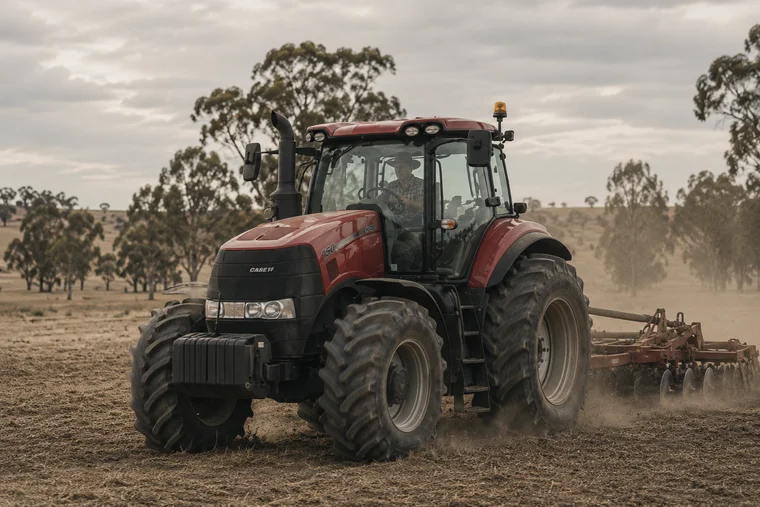
Farm motor and agricultural machinery insurance should keep pace with changes to the equipment and the farming operation. A review is particularly worthwhile:
- before harvest or another high-use season
- when purchasing, replacing or materially revaluing machinery or vehicles
- when adding attachments, implements or modifications
- when regular drivers or operators change
- when beginning contracting, hire or work away from the farm
- when public-road use or regular road crossings change
- after a significant claim or material change in ownership, finance, lease arrangements or use
Contracting, hire and work away from the insured farm should be disclosed because these activities may affect insurer acceptance, the cover offered and how the policy responds to a claim.
Broker support
Farm motor insurance built around how the equipment is used
Farm machinery is rarely as simple as a list of registration numbers. Tractors, harvesters, vehicles, implements and attachments may be used differently, insured differently and valued differently, so we work through the machinery schedule with the farming operation in mind.
We help clients understand the cover available, arrange insurance that reflects their vehicles and machinery, and keep it updated as equipment and use change. If a claim occurs, we stay involved, help work through the process and liaise with the insurer on the client's behalf.
RMA Insurance Brokers works with farmers, agribusinesses and regional businesses across Australia. Through our relationship with RMA Network Livestock & Property Agents, we have connections throughout regional Australia. We also support clients outside the RMA Network and across other parts of Australia.
How we help
How we help farmers
review vehicle and machinery schedules and values
identify new, replacement or modified equipment
check registration status, attachments and implements
review road use, contracting, hire and tool-of-trade activities
approach suitable insurers and explain differences in available cover
manage renewals, policy changes and claims
What happens after you enquire?
We contact you
A broker from RMA Insurance Brokers will get in touch to talk through your vehicles and machinery, your current insurance and when it falls due, along with any recent or planned changes.
We confirm what is needed
We will explain what information is needed, answer your questions and confirm the next step before approaching insurers.
Useful information to have available
- make, model, year and identifier for each vehicle or item of machinery
- current values and settlement basis where known
- normal use, locations and public-road use
- regular drivers and operators
- trailers, implements, attachments and modifications
- claims, finance arrangements and planned changes
FAQs
Frequently asked questions
What is the difference between comprehensive, third party fire and theft, and third party property damage cover?
Comprehensive cover may insure accidental loss of or damage to the insured vehicle or machinery, theft and selected legal liability. Third party, fire and theft may provide selected fire and theft cover for the insured asset together with legal liability. Third party property damage only covers legal liability for damage caused to other people's property, without covering accidental damage to the insured item itself.
Insurers use different names, structures and definitions, so the level of cover selected for each asset should be confirmed from the policy schedule and wording.
What should be considered for unregistered agricultural vehicles and public-road use?
Insurance may be available for eligible unregistered or registration-exempt agricultural vehicles, subject to insurer acceptance and the policy.
Using such a vehicle on a public road or public property may require a registration exemption, permit or other legal authorisation, and property-damage liability may depend on those requirements being met. Road use and crossings between paddocks should be disclosed and confirmed rather than assumed.
Compulsory third party or equivalent statutory injury insurance is separate from property and liability insurance, and the arrangements vary between Australian states and territories. The position should be confirmed for each vehicle and jurisdiction.
How are attachments and unspecified machinery treated?
Not necessarily.
Attachments, implements, accessories and permanently attached equipment may need to be individually identified with realistic values, or included within the insured value of the relevant machinery.
Where blanket or unspecified cover is provided, per-item and overall limits may apply that sit below replacement value. The schedule and wording should be checked for each asset.
Does farm motor insurance cover machinery breakdown or liability while machinery is working?
Internal mechanical, electrical, electronic or hydraulic breakdown is commonly outside farm motor damage cover unless it is separately insured, so machinery breakdown insurance may need to be considered.
Liability arising while an agricultural vehicle or item of machinery operates as a tool of trade, such as spraying, harvesting, ploughing, lifting or pumping, may also be excluded from motor legal liability. That exposure may need to be reviewed under Farm Insurance or another liability policy.
Definitions and exceptions vary between insurers, so the motor and liability policies should be reviewed together.
What happens if I need to make a farm motor insurance claim?
If an incident occurs, contact emergency services where required and, where safe, take reasonable steps to protect people and property and prevent further loss.
Contact RMA Insurance Brokers as soon as reasonably possible. We help notify the insurer, identify the information requested, communicate with the insurer and help you understand the claim process. Any insurer emergency or claims contact shown in the policy documents may also be used.
For emergency claims assistance outside business hours only, contact Brendan Kelly on 0411 013 178 or Brad Hubble on 0409 419 487.
Explore
Related insurance
Farm Insurance
Broader insurance for farm property, machinery, livestock, liability and other farming risks.
Crop Insurance
Specified-event crop insurance for broadacre farming businesses and seasonal crop exposures.
Livestock & Stud Stock Insurance
Insurance considerations for commercial livestock and higher-value breeding animals.

Management Liability Insurance
Insurance considerations for directors, officers and businesses facing management-related claims and statutory exposures.

Cyber Insurance
Insurance considerations for cyber incidents, data breaches, business interruption and incident-response costs.
Review your farm motor insurance
Farm vehicles and agricultural machinery change as equipment is purchased, replaced, modified or used differently. RMA Insurance Brokers helps farmers review whether the machinery schedule, values and cover still reflect the equipment being used today.
The information on this page is general information only and does not take into account your objectives, financial situation or needs. Cover is subject to the terms, conditions, limits and exclusions of the relevant policy. Insurance products and available cover vary between insurers. Please review the relevant policy documentation and obtain advice appropriate to your circumstances before making a decision.